Start with the full system, not a lucky setting
Bald eagle photography can feel unpredictable. One morning, birds are feeding in every direction. The next, the same stretch of river looks empty. Even when the action happens, a fast fishing pass can leave you with soft wings, missed focus or a white head with no recoverable detail.
The answer is not simply a longer lens or a faster camera. Consistent results come from combining a dependable camera setup with an understanding of open water, winter weather, wind and eagle behavior.
This is the system I use when photographing bald eagles around winter rivers near St. Louis. It is designed to help you make better decisions before the bird launches, then react quickly when the action begins.
Quick camera settings for bald eagle photography
Use these as a dependable starting point, not an unbreakable formula. They keep motion and depth of field under control while allowing ISO to respond as the light changes.
Check the histogram and highlight warning after a test sequence. The bright white head and tail of an adult eagle, not the overall brightness of the frame, should guide your final exposure.
- Exposure mode: Manual exposure with Auto ISO
- Shutter speed: 1/2000–1/3200 sec for flight and fishing action
- Aperture: f/5.6–f/7.1 for one bird; f/8 when several birds may overlap
- ISO: Auto ISO with a limit appropriate for your camera
- Exposure compensation: Start near −0.3 to −0.7 EV over bright water, ice or snow
- Autofocus: Continuous AF (AF-C or AI Servo)
- Focus area: Small-to-medium tracking zone for flight; a smaller point or zone for a perched bird
- Drive mode: High-speed continuous burst
- File type: RAW
Choose shutter speed based on the action
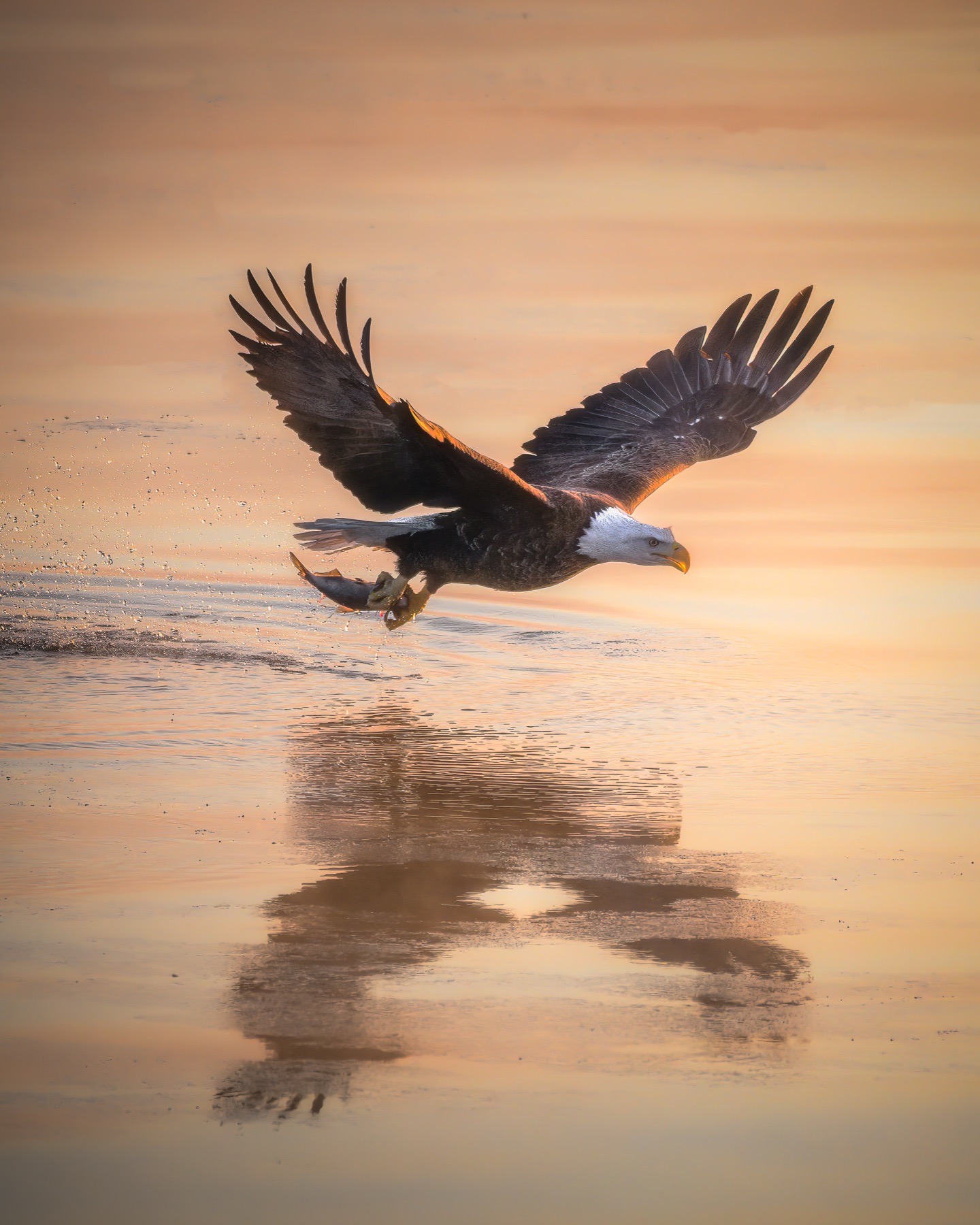
A shutter speed of 1/2000 second is a dependable minimum for general flight. Move toward 1/2500 or 1/3200 when a bird dives, grabs a fish, shakes water from its feathers or changes direction during an aerial interaction.
You can work around 1/1250–1/1600 for a slow glide or an environmental frame, especially when light is limited, but the margin for error becomes smaller. A close bird crosses the frame faster than a distant one, so proximity may require more shutter speed even when the eagle appears to be flying smoothly.
For perched portraits, you can lower the shutter speed when the bird is relaxed. Keep enough speed in reserve for a sudden takeoff, though. Eagles rarely announce the moment for long.
Protect detail in the white head and dark body
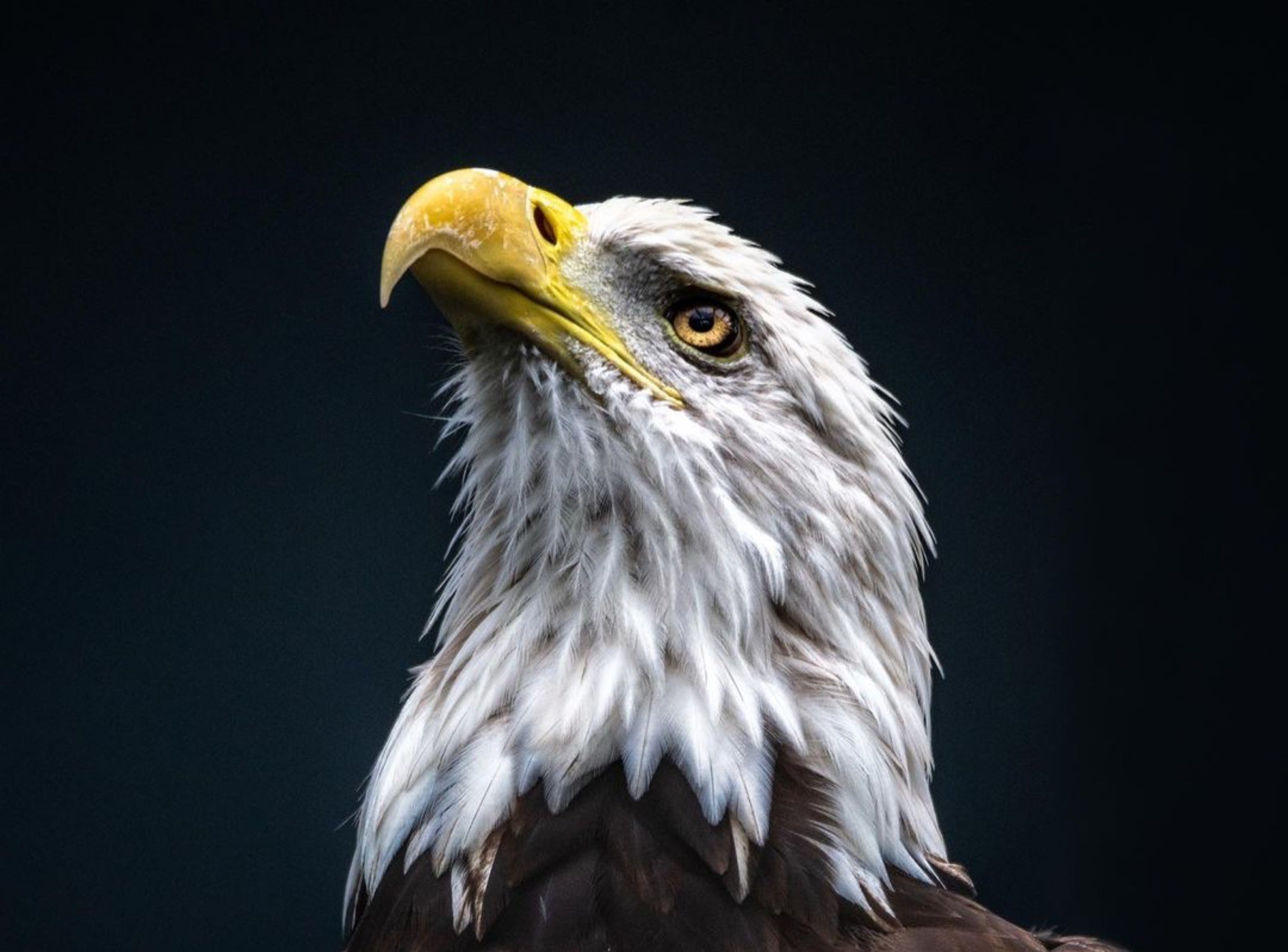
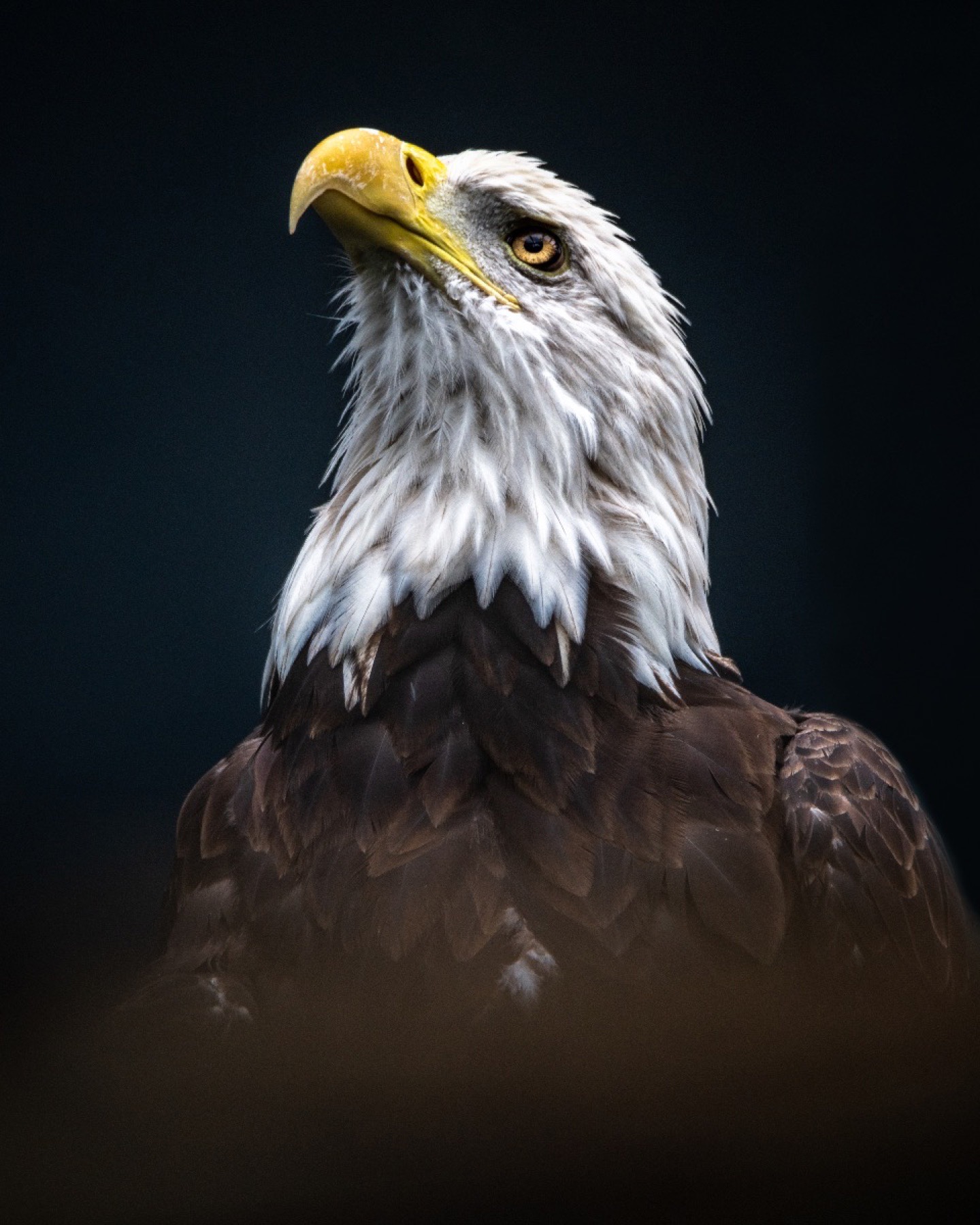
An adult bald eagle presents a difficult exposure problem: a dark brown body and a bright white head in the same frame. Snow, ice and reflected sunlight make that contrast even harder to manage.
Manual exposure with Auto ISO works well because you can lock the shutter speed and aperture while still adapting to changing light. When the white feathers begin to blink on the highlight warning, reduce the exposure compensation until important texture returns. Bright water or snow may require more negative compensation than a soft, overcast background.
Do not rely only on the image preview. Screen brightness can make a frame appear safer or darker than it is. Use the histogram and highlight warning. Make the decision based on the bird.
On overcast days, you can often expose closer to neutral because the light is softer. In strong backlight, decide whether you want feather detail, a rim-lit bird or a clean silhouette before the eagle reaches the best part of the frame.
Set autofocus for bald eagles in flight
Use continuous autofocus and enable animal or bird-eye detection if your camera tracks it reliably. Eye detection is helpful, but it does not replace good technique. The camera still needs a clear subject, a suitable focus area and enough time to acquire the bird.
A small-to-medium tracking zone is a useful starting point for flight. It gives you room to follow erratic movement without asking the camera to choose from the entire frame. Against a busy treeline, the largest automatic zone may jump to high-contrast branches or the background.
For a perched eagle, use a smaller focus area and place it on the eye or face. Keep continuous autofocus active if a takeoff is likely. Back-button focus can make it easier to hold focus on the bird while separating focus activation from the shutter, but only use it if the control already feels natural.
Before the first eagle moves, practice on gulls, crows or waterfowl. Track birds flying toward you and across the frame, then zoom in on several test images. Confirm that focus is staying on the head rather than the nearer wing or the background.
Improve burst timing instead of holding the shutter
The goal is not to record every fraction of a second. It is to recognize the moments that produce strong body position, separation and wing shape.
For a perched eagle, watch for a change in posture: a forward lean, a tail fan, a crouch or a shift of weight into the feet. Begin the burst as the weight shifts, before the wings fully open.
During a fishing pass, pre-focus the likely strike lane and use short bursts through three moments: the talons extending, contact with the water and the lift-out. During a chase or theft attempt, leave enough space in the frame for a second bird to enter.
Short, deliberate bursts reduce duplicate files, protect the camera buffer and make the editing process much easier later.
Find bald eagles by finding dependable open water
In winter, open water is usually more useful than a famous location pin. Tailwaters below dams, river confluences, spring-fed tributaries, warm inflows and openings along an ice edge can concentrate fish. Food attracts gulls, crows and waterfowl. Those birds help reveal where eagles may become active.
Start by scanning the water rather than the trees. Look for current seams, eddies, turbulence, openings in the ice and repeated surface activity. Then scan exposed trees and snags above those features. A perch becomes much more valuable when it gives an eagle a direct view of productive water.
Gulls suddenly lifting or circling may indicate a fish pulse or an approaching eagle. Crows or ravens gathering and calling along a shoreline may reveal a food source. Waterfowl repeatedly flushing without an obvious human disturbance should make you scan the treeline and higher approach routes.
The most useful skill is not memorizing one location. It is learning to recognize the conditions that make a location productive.
Use a three-stop scouting loop
Build a short route with three different habitat types within a reasonable drive. Give each stop enough time to reveal a pattern, but do not spend the entire morning waiting at a quiet overlook. If there is no bird traffic, no food signal and no reason for the conditions to improve, move. Return later if the wind, temperature or light changes.
Keep notes on the conditions that worked: wind direction, temperature trend, open-water pattern, time of day, active perches and the type of behavior you photographed. Those notes turn isolated outings into a repeatable scouting system.
- Tailwater or spillway: Look for open current, fish activity, gulls and eagles using exposed lookout trees
- Confluence or warmer tributary: Look for an open tongue of water, working waterfowl and a clear approach lane
- Ice edge or backwater opening: Look for small holes, repeated ripples and nearby perches with regular traffic
Let wind predict the flight path
Bald eagles usually launch and land into the wind. That single behavior can help you predict direction before the wings open.
Start with the wind at your back when you want a bird to approach more directly. Then move slightly off-axis rather than standing exactly in line with the flight path. A modest angle often produces better separation between the head, body and wings.
Study the perch before committing to a position. Where is the open water? Which side gives the eagle a clear launch? Is there a branch blocking the first wingbeat? Is your background clean at the point where the bird is likely to bank?
Use freeze thaw cycles and weather to decide when to go
Winter conditions redistribute both fish and birds. After a hard overnight freeze, the most reliable open water may become the center of activity. A warming period after deep cold can open new feeding areas and change where eagles travel. Snow and flat overcast light can create beautiful backgrounds while making exposure easier than harsh sun on reflective water.
Weather does not guarantee action, but it changes the odds. Compare the temperature trend with the water you can actually see. Watch whether ice is forming, breaking or moving. Combine that with wind direction, cloud cover and the sun’s position to choose a location that offers both bird activity and workable light.
Photograph behavior, not just birds
Once you find eagles, resist the urge to follow every bird with the lens. Watch long enough to identify repeated behavior.
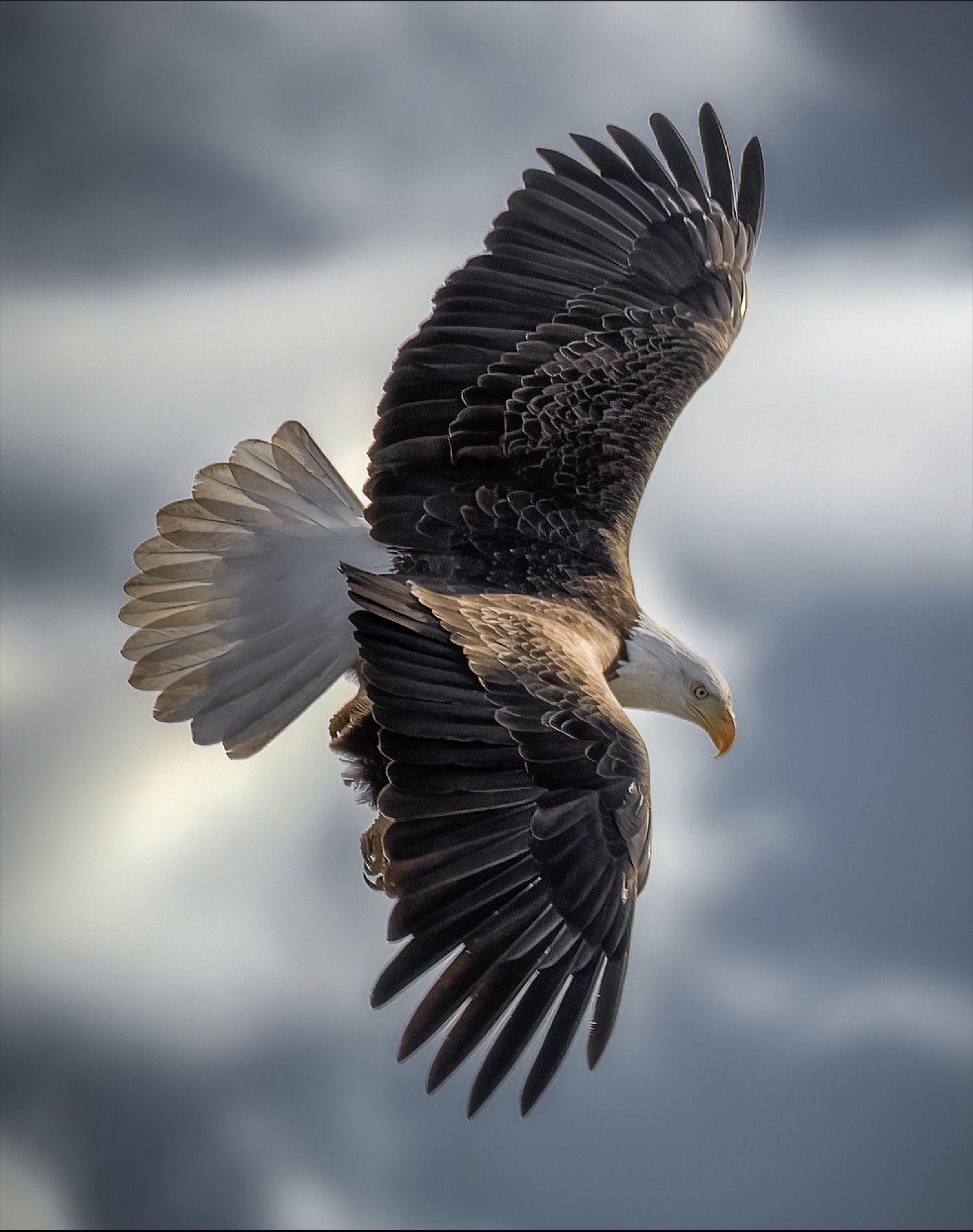
An eagle carrying a fish may look back repeatedly when another bird is closing from behind. A perched bird leaning into the wind may be preparing to launch. Gulls gathering at a current seam may mark a strike zone that multiple eagles will use. Birds returning to the same perch can give you another chance to refine exposure, background and position.
Anticipation creates cleaner photographs because you can pre-compose instead of reacting late. Leave room in front of the bird, keep the background in mind and wait for the action to enter the frame you already chose.
Use ethical fieldcraft
The best photograph is not worth changing an eagle’s behavior. Give birds enough space to keep feeding, resting, preening and using their normal flight paths. If an eagle becomes fixed on you, stops what it was doing, repeatedly shifts position or leaves because of your approach, back away.
Use your vehicle as a blind where it is safe and legal. Avoid walking directly toward a perched bird. Never block the route between a perch and open water, crowd a roost or use food and calls to manufacture action.
Be especially conservative around nests. Bald eagles and their nests are federally protected. Local requirements can be more restrictive, while sensitivity varies by site and season. Follow posted closures and current guidance from the U.S. Fish and Wildlife Service or the relevant state wildlife agency. Do not publish precise nest or roost locations.
Ethical distance is not only about a number. The bird’s behavior is the final signal. If your presence changes it, you are too close.
Prepare for winter river conditions
Riverbanks can be more dangerous than they look. Treat shelf ice as unstable, avoid undercut edges and keep a clear retreat route. Wear a windproof outer layer, keep spare batteries warm and carry basic traction, a headlamp and an emergency layer.
Set up the camera before stepping into the best viewing area. Windows, lens hoods, autofocus controls and exposure should be ready before the birds become active. Quiet preparation protects the location and prevents rushed mistakes.
Frequently asked questions
What is the best shutter speed for bald eagles in flight? Start around 1/2000 second for general flight. Use 1/2500–1/3200 for fishing passes, dives, fights and close birds with fast wing movement.
What aperture should I use? For one bird, f/5.6–f/7.1 is a practical starting range. Use f/8 when two or more birds may overlap or when you want more environmental detail, provided there is enough light to maintain the shutter speed you need.
What autofocus mode should I use? Use continuous autofocus (AF-C or AI Servo) with a small-to-medium tracking zone for flight. Enable bird-eye detection when it is reliable, but keep the focus area controlled against busy backgrounds.
What is the best weather for bald eagle photography? Snow, fog and overcast light can simplify the background and soften contrast, while a freeze followed by warming can concentrate activity around open water. Read the temperature trend, wind and available light together rather than waiting for one perfect forecast.
What lens is best for bald eagle photography? A 400–600mm zoom offers a useful balance of reach and flexibility for many situations. More reach does not justify moving closer.
What is the best time of day? There is no universal best hour. Early light can be beautiful, while a cold night followed by warming temperatures may increase activity later in the morning. Use temperature, open water, wind and bird signals together instead of relying on the clock alone.
How close can I get to a bald eagle? Let the eagle decide. Stay far enough away that it keeps feeding, resting and using its normal flight path. If it fixes on you, shifts repeatedly or leaves because of your approach, back away and follow posted closures and current wildlife guidance.
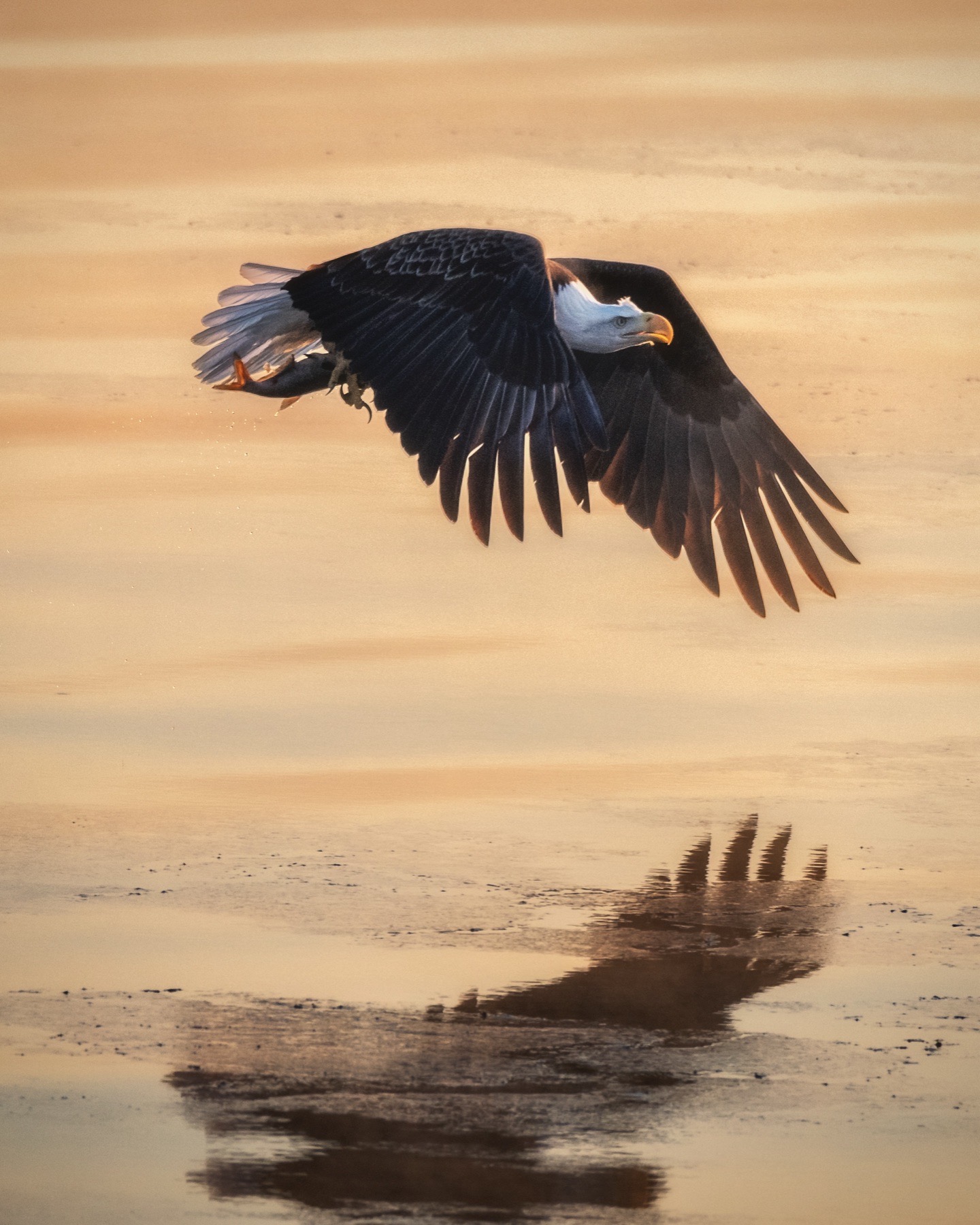
Make the decision before the action
Bald eagle photography gets easier when the essentials are locked in before the action starts. Protect the white feathers, find productive water and use wind and behavior to narrow the possibilities.
That preparation gives you time to think about light, background and wing position instead of simply trying to keep a bird in the frame. The more consistently you read the river, the less bald eagle photography feels like luck.
The strongest eagle frames start before the bird launches. Wind, light and position narrow the possibilities so you can react with purpose.