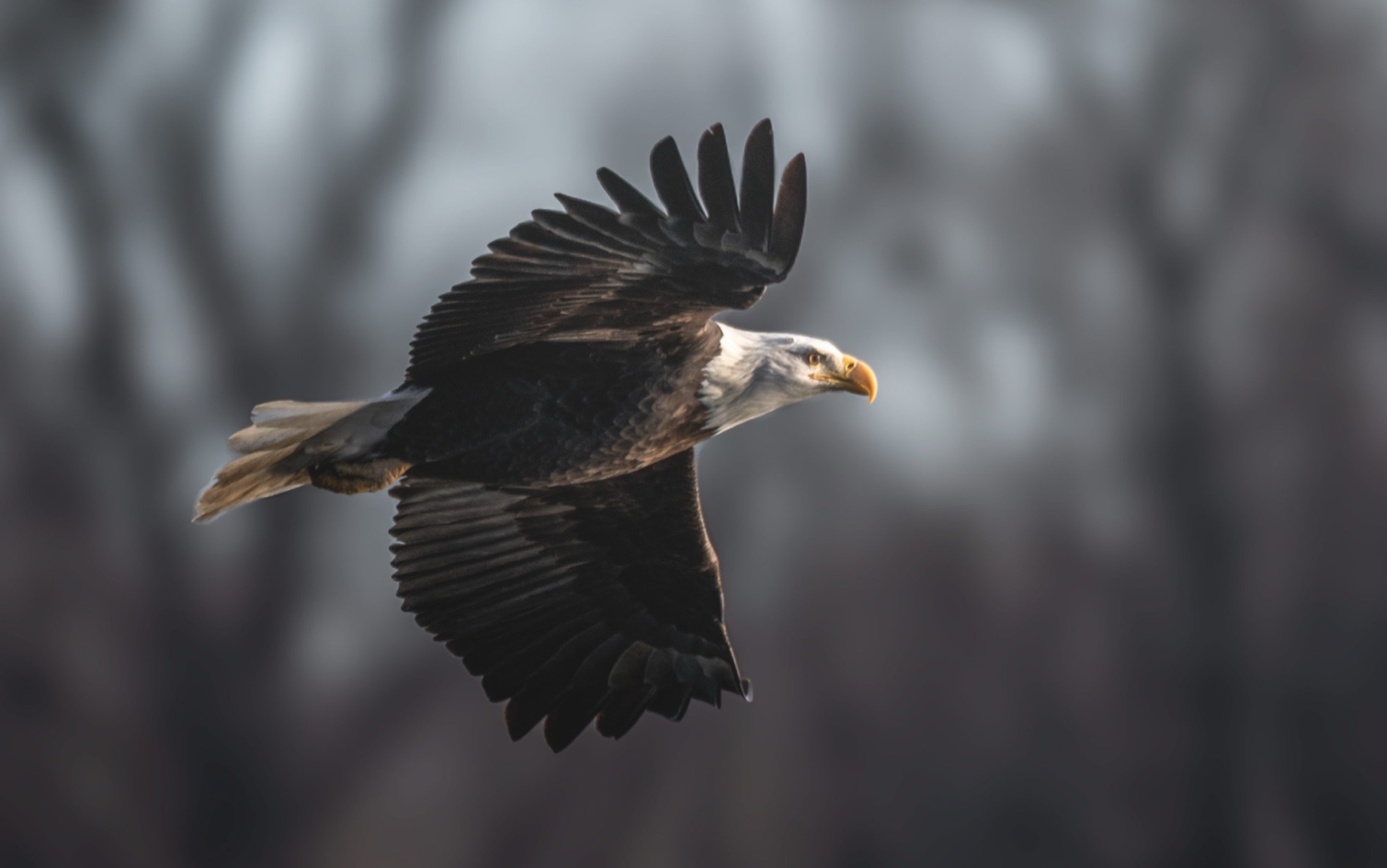
There is no bad light, only a different picture
Winter on the river changes quickly. Clear sunrise, low cloud, fog and reflected snow each create a different kind of opportunity. The job is not to wait for one perfect forecast; it is to recognize what the current conditions are good at revealing.
Use this guide to decide when and where to work. For camera settings, scouting and the complete field system, start with the main bald eagle photography guide.
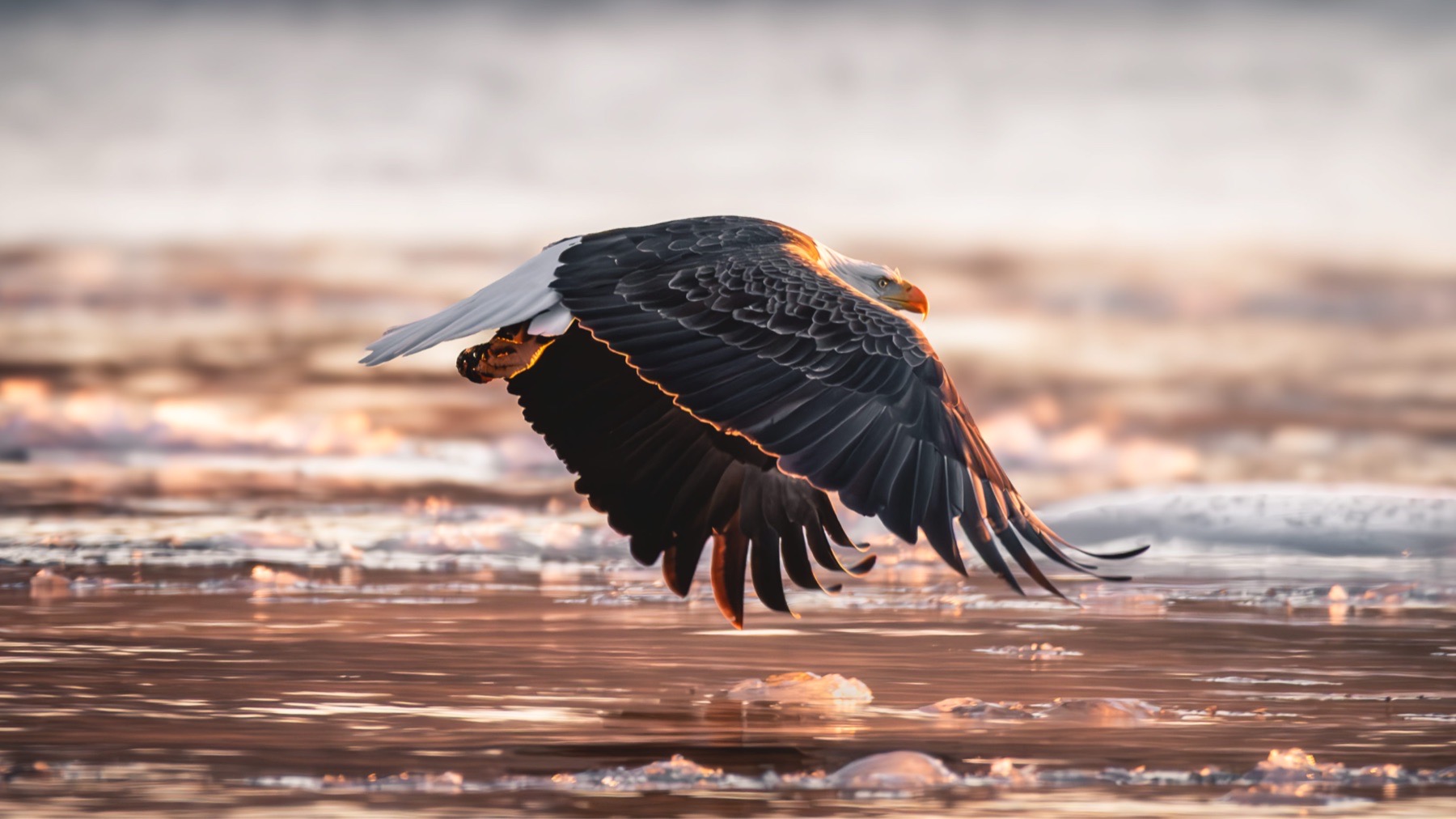
Use freeze thaw cycles to find productive water
When lakes and slower river sections freeze, the water that stays open matters more. It preserves access to fish and waterfowl, so check reliable tailwaters, tributary mouths and ice edges before searching miles of frozen shoreline.
The largest opening is not always the most useful. Watch the edge where current, birds or fish activity repeats, then choose a position with a clean background and enough room for the approach and lift-out.
- Hard overnight freeze: check reliable open water first
- Warming trend: recheck seams, tributaries and feeding lanes that were frozen
- Moving ice edge: watch where accessible water narrows and activity concentrates
Different clouds create different exposure problems
Solid overcast is steady and forgiving. It reduces the brightness gap between a white head and dark body, holds feather detail and extends the useful shooting window. Let ISO rise when needed. Sharp detail is more valuable than a low ISO number.
Broken clouds create quick swings from flat light to direct sun. Set your exposure for the brightest light you expect, watch the white head and tail and check again after every major change.
High haze keeps some direction in the light while softening contrast. It can work well for shape and reflective water, but a bright veil behind the bird still raises the background luminance and can make the whites feel hotter than the subject alone suggests.
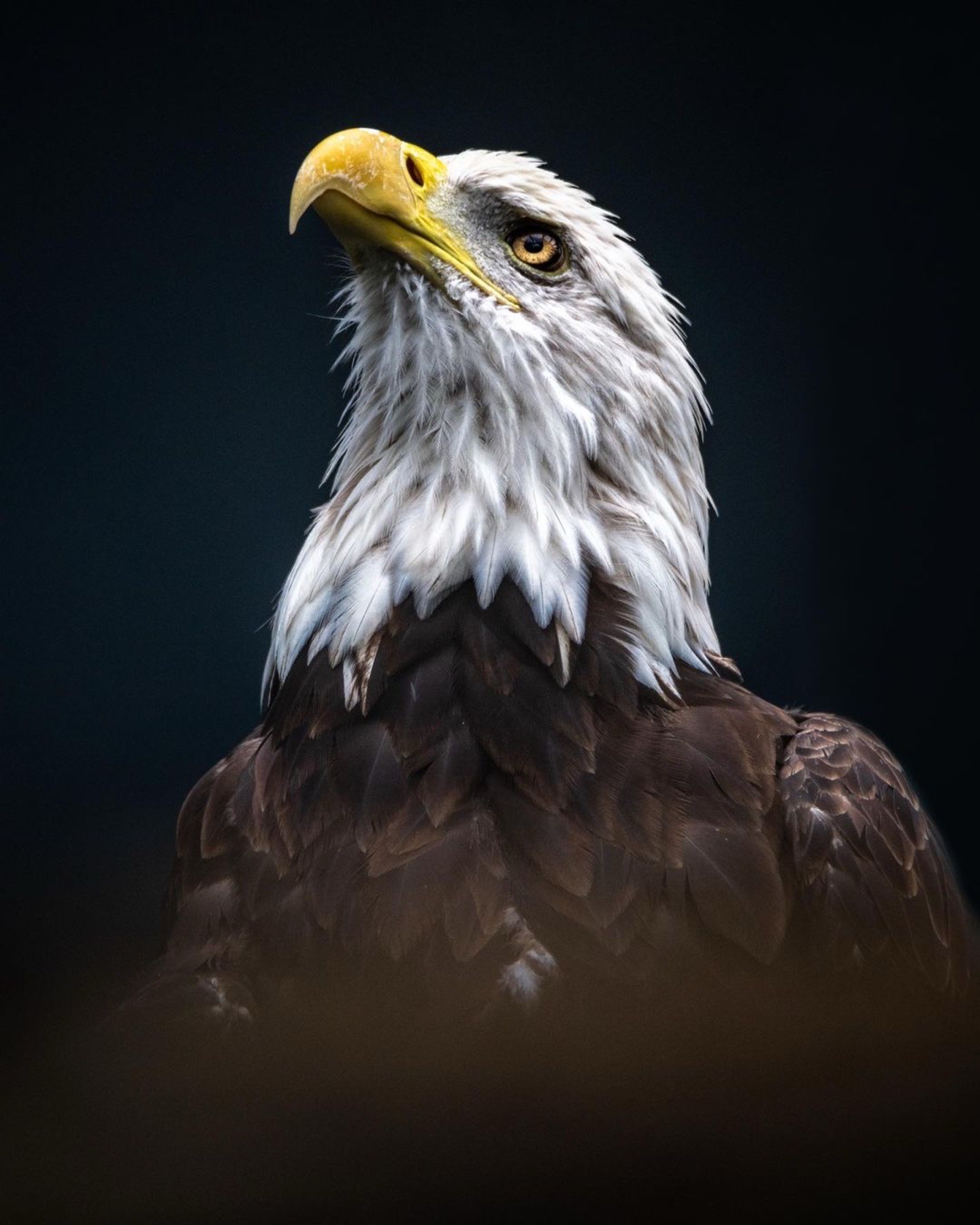
Change your angle before changing your exposure
The white head is not always the real exposure problem. Bright snow or reflective water behind it can push the whole frame toward clipping, while dark trees may let you expose more generously for the eye and body.
When specular glare is the problem, move first. A step or two can replace a white reflection with midtone water and improve both feather detail and background separation without changing the exposure.
- Bright water or snow: protect the white head and tail
- Dark trees: expose for cleaner eye and body detail while watching the whites
- Specular glare: change position before reaching for compensation
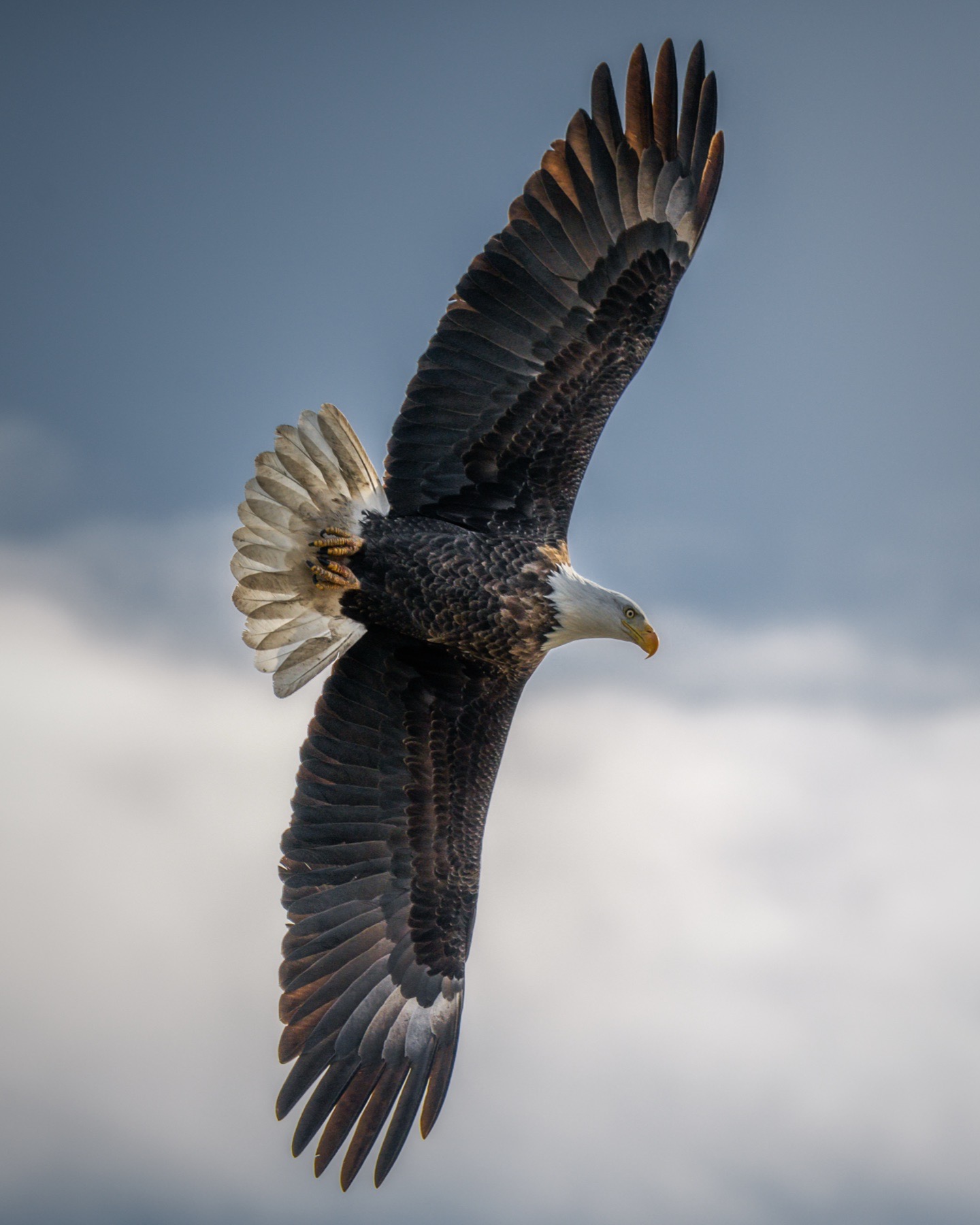
Use clear light for shape and story
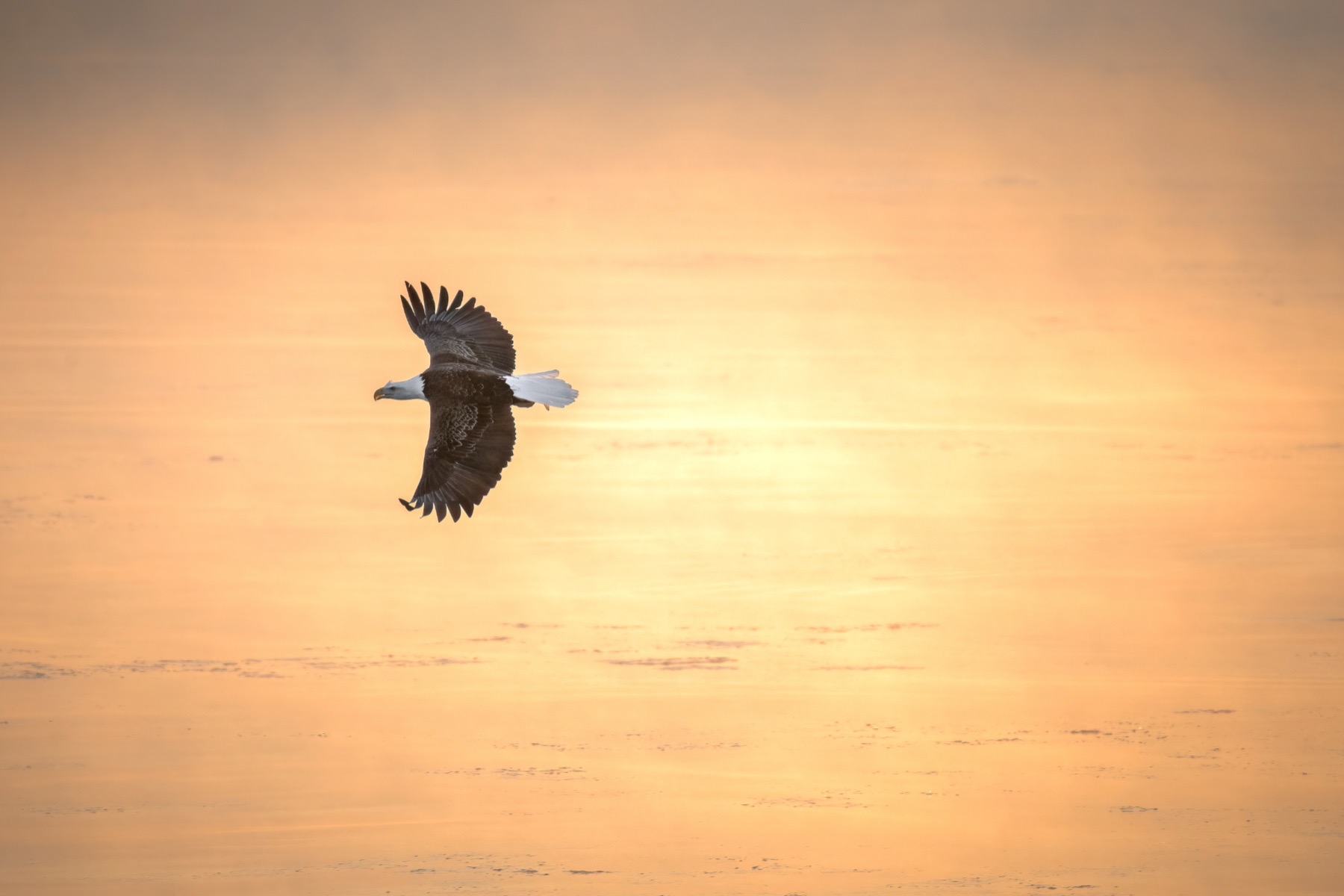
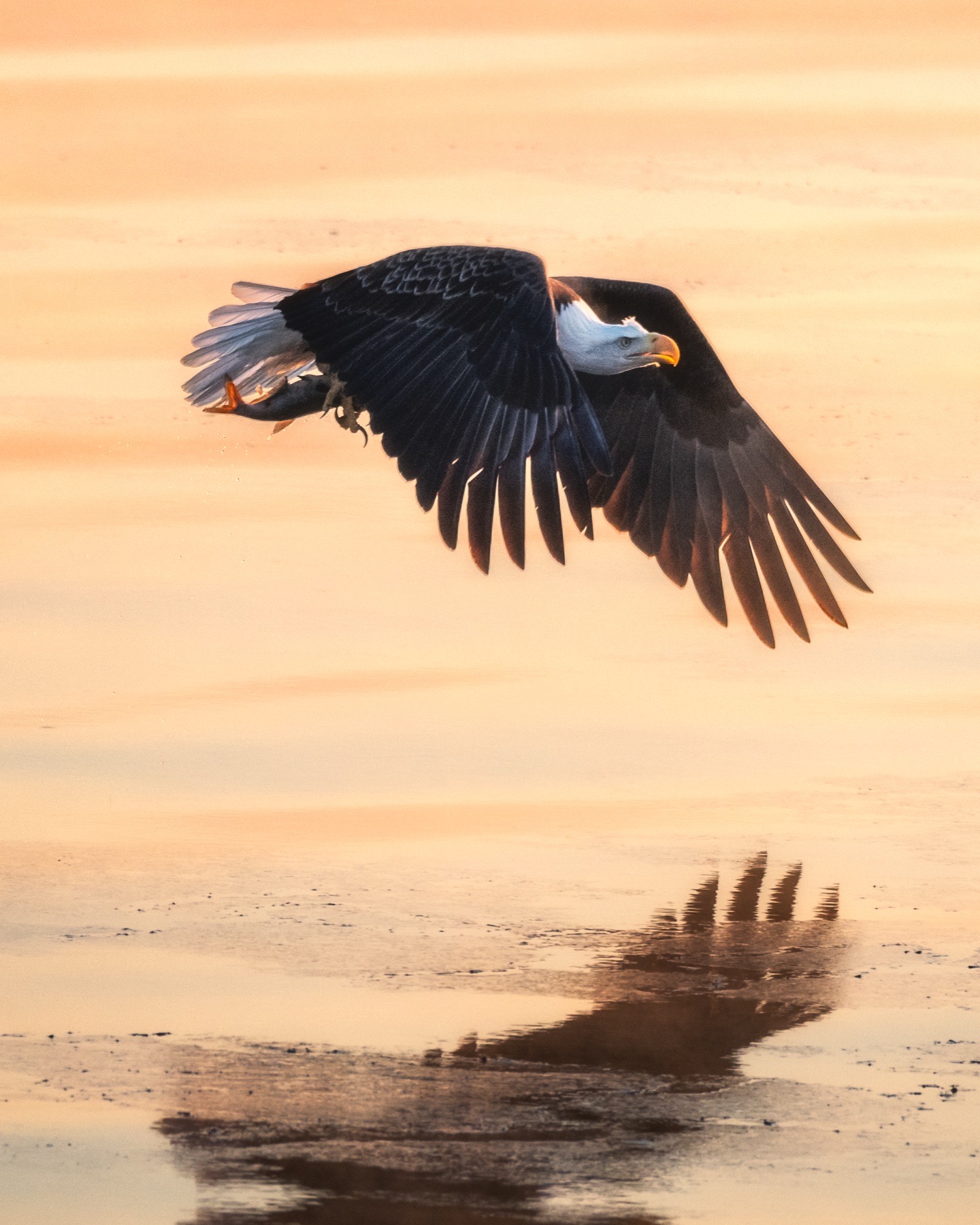
Low front or side light brings out feather structure and gives the eye a bright catchlight. Backlight turns spray, breath and wing edges into graphic elements. Expose intentionally for the highlight you want to preserve, then simplify the background by changing your angle before the bird arrives.
Treat snow, rain and fog as shooting conditions
Light snow adds texture without hiding the bird. Use a faster shutter speed to hold individual flakes or slow down when short streaks support the feeling of weather.
Heavy snow can pull autofocus toward the foreground and reduce visibility. Look for perched gestures, launches and environmental frames instead of forcing clean flight photographs through a wall of flakes.
Mist and fog simplify a busy far bank, but low contrast can make autofocus and exposure less decisive. Rain and wet plumage can deepen dark feathers and create stronger tonal separation when the background stays quiet.
Follow the conditions, not the clock
A warm spell after a hard freeze can reopen feeding lanes and move birds. Wind shifts alter approach angles. Rising sun changes which bank gives you the cleanest background. Keep reassessing water, wind, light and bird traffic; the best position at dawn may be the wrong one an hour later.
In my field experience, activity sometimes changes before or after a storm. I treat that as a pattern to watch, not a guarantee. I still make the decision from the birds, open water and light in front of me.
Weather tells you what kind of opportunity you may get. Wind tells you where to stand for it.
Turn the forecast into a field decision
Use the forecast to choose a starting point, then adjust to the water, light and bird traffic you actually find.
| Conditions | Look for | Field decision |
|---|---|---|
| Solid overcast | Even light | Work detail, portraits and action longer |
| Broken clouds | Fast exposure swings | Protect highlights and recheck often |
| Light snow | Texture around the bird | Choose whether flakes freeze or streak |
| Heavy snow | Reduced visibility | Favor perches, gestures and launches |
| Fog | Simple low contrast backgrounds | Work environmental frames and watch autofocus |
| Clear sunrise | Directional light | Choose front light, rim light or backlight before the pass |
| Hard freeze | Limited open water | Check reliable feeding areas first |
| Thaw | New seams and open lanes | Recheck water that was frozen |
Frequently asked questions
What is the best weather for bald eagle photography?
There is no single best forecast. Overcast favors feather detail, snow and fog create atmosphere and clear directional light creates stronger shape, rim light or backlight.
How should I expose a bald eagle against snow?
Protect the white head and tail. Check the histogram and highlight warnings after the light changes, then reduce exposure as needed instead of relying on one fixed compensation value.
Is overcast good for bald eagle photography?
Yes. Solid overcast reduces the brightness difference between white plumage and the dark body, holds detail and can extend the useful shooting window.
Does cold weather make bald eagles easier to find?
Cold itself is not the magic ingredient. Ice changes where food remains accessible, so wintering bald eagles may concentrate around the open water that remains.
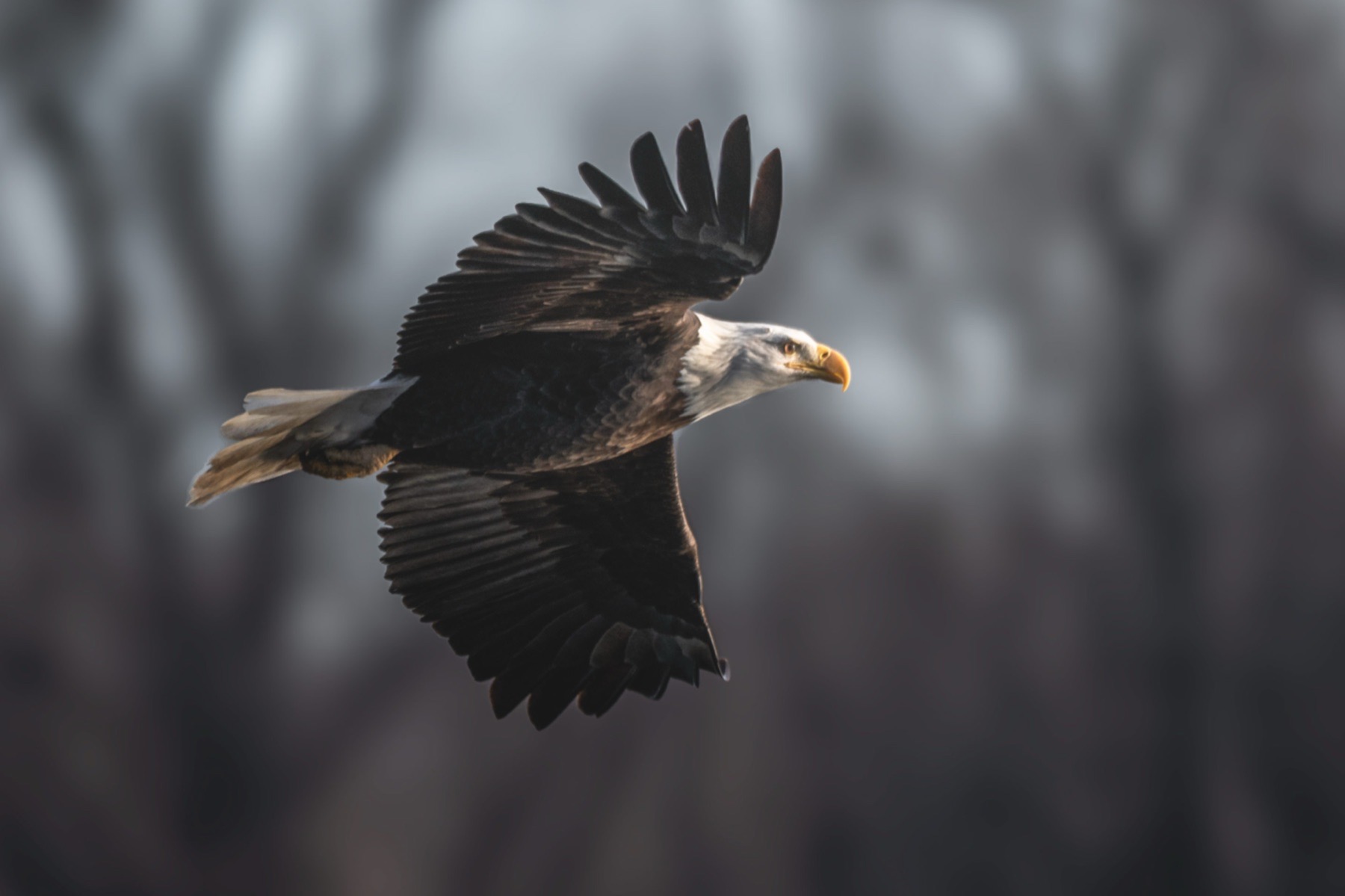
The strongest eagle frames start before the bird launches. Wind, light and position narrow the possibilities so you can react with purpose.