Start with one reliable wind rule
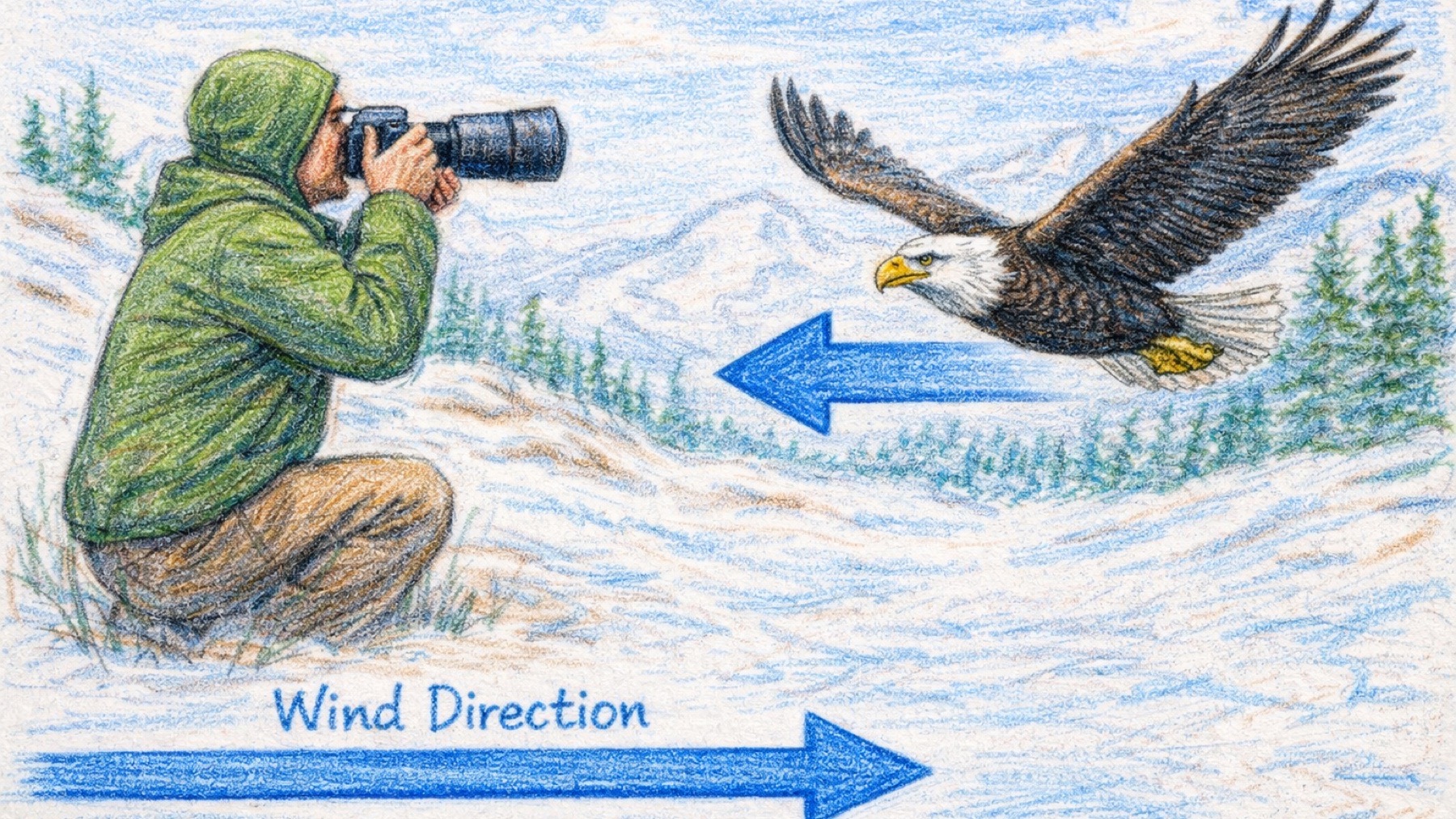
Bald eagles usually launch, land and set up attacks into the wind. That turns wind direction from background information into a positioning tool.
Confirm the wind where you are standing. Watch ripples, steam, grass or a loose camera strap. A forecast can be right for the river and wrong for your bank, especially near a dam or between steep shorelines.
For a practical flight baseline, start around 1/2000–1/3200 sec, f/5.6–f/7.1 and Auto ISO. That is enough for this guide. The full exposure, autofocus, scouting and ethics system belongs in the main bald eagle guide, so the focus here stays on position and flight path.
Choose the photograph before you move
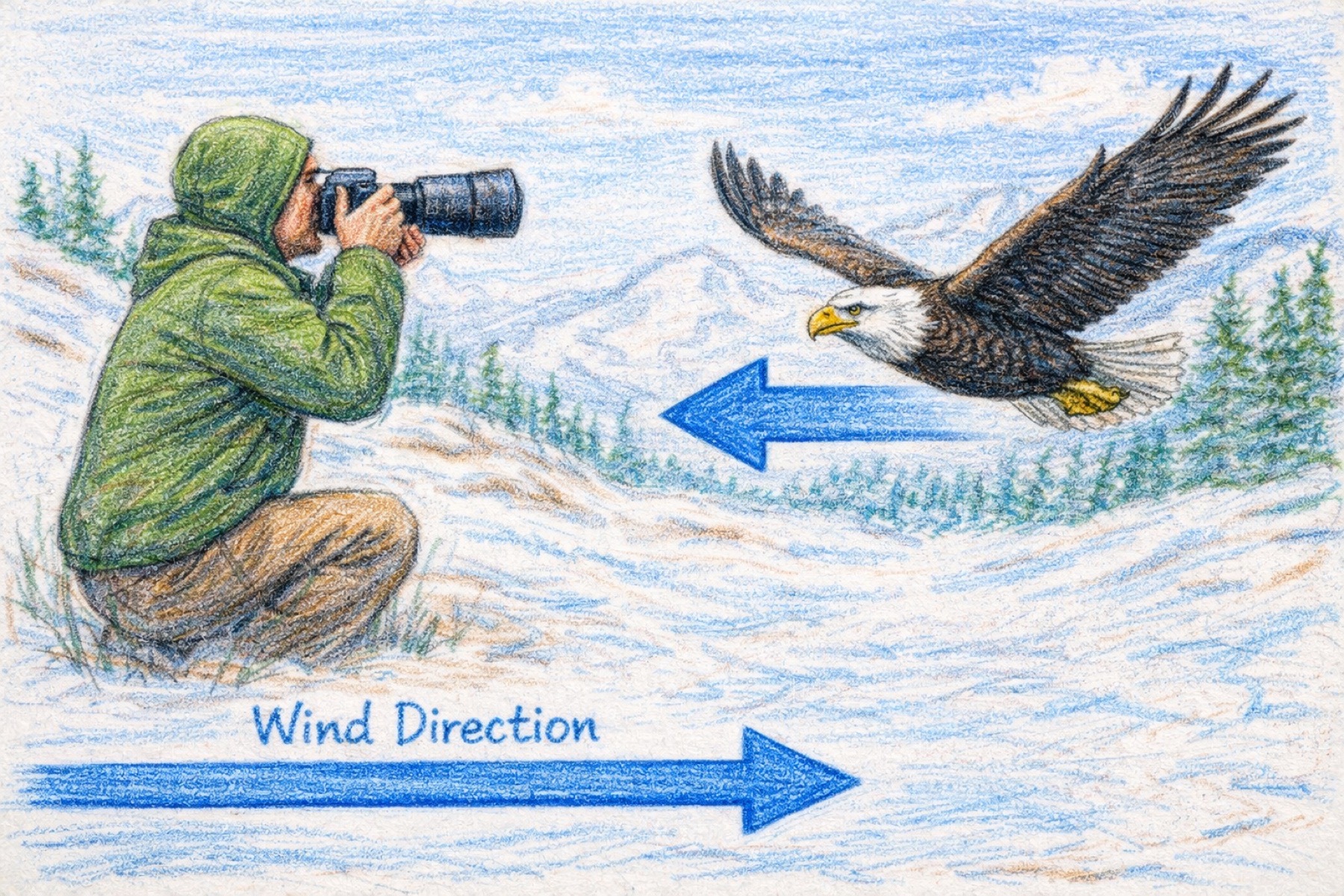
Decide which view you want before changing position. The same perch can produce a frontal, a clean profile or a fast departure depending on where the wind is relative to you.
- Wind at your back: best odds for frontal takeoffs, eye contact and talons-forward approaches
- Crosswind: best odds for banks, profiles and strong wing geometry
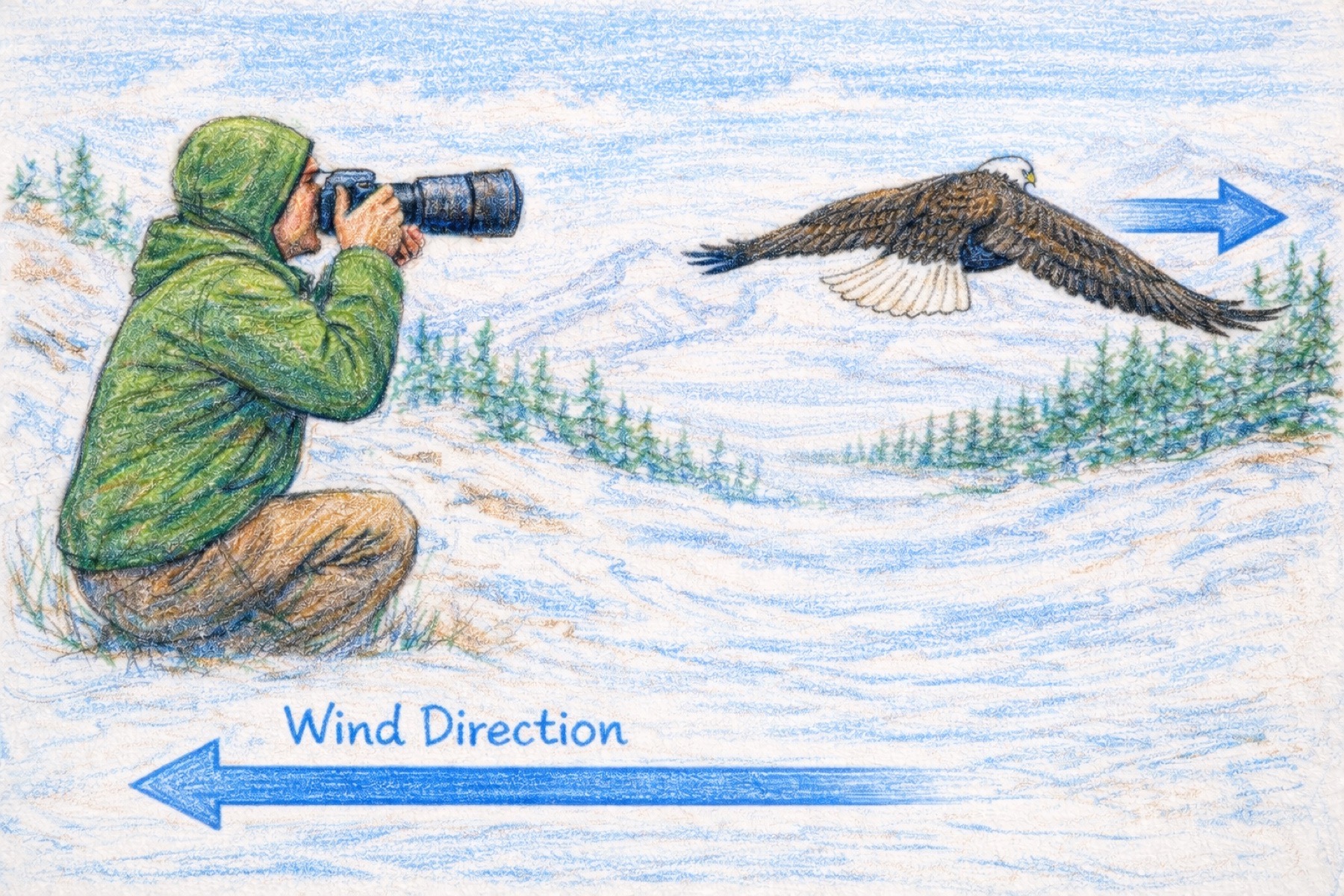
- Wind in your face: expect departures, carry-outs and more views of the bird leaving
Put the wind at your back for frontals
When the wind hits the back of your neck, an eagle ahead of you is more likely to face roughly toward you for takeoff or landing. Stand slightly off the beak line rather than directly in it. That small angle keeps the eye visible and gives the wings more depth as the bird pushes forward.
Do not let wind solve one problem and create another. Check the background and light from the new position before settling in, then leave the bird enough room to keep using its normal path.
Use wind in your face for exits and carry-outs
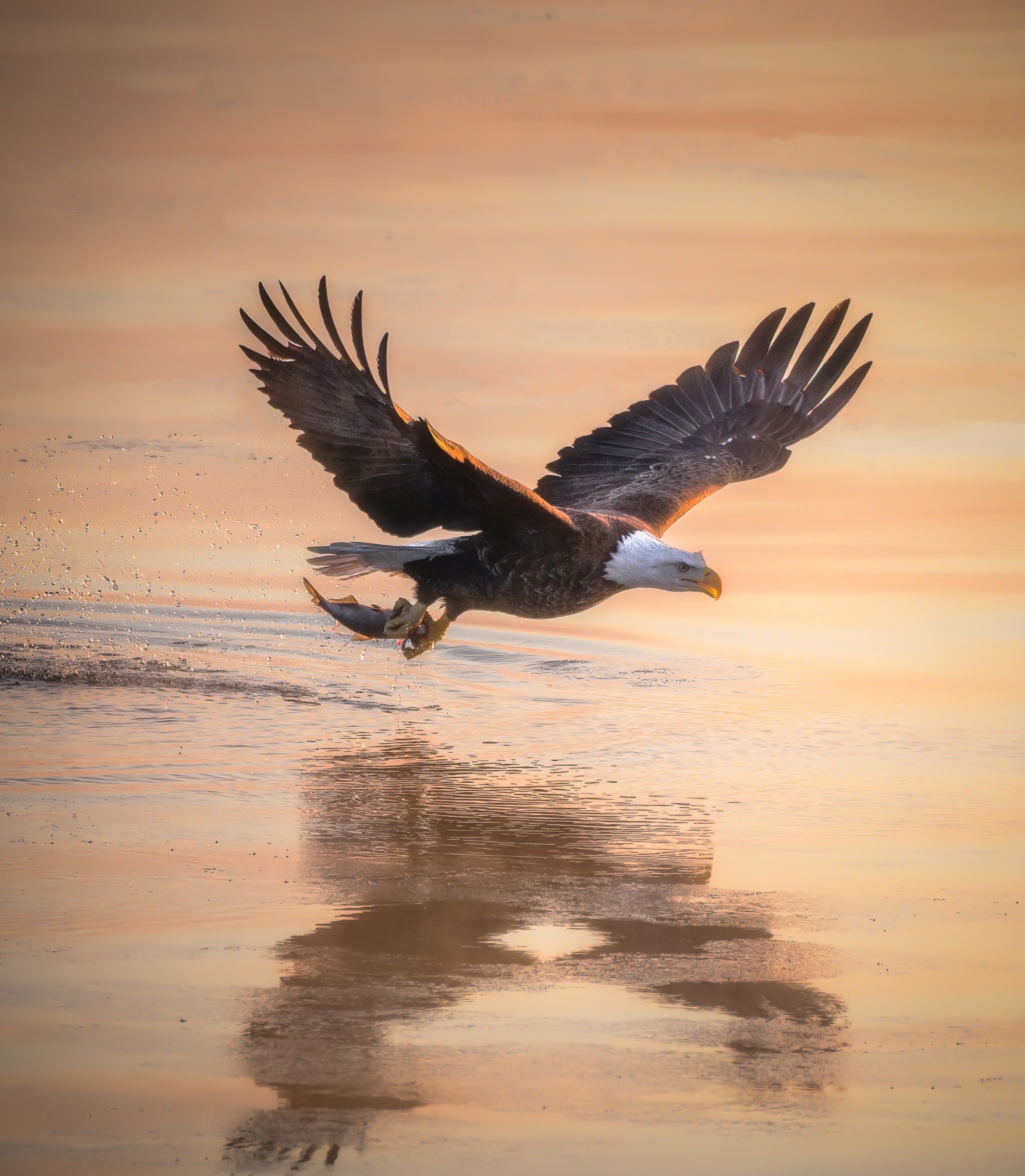
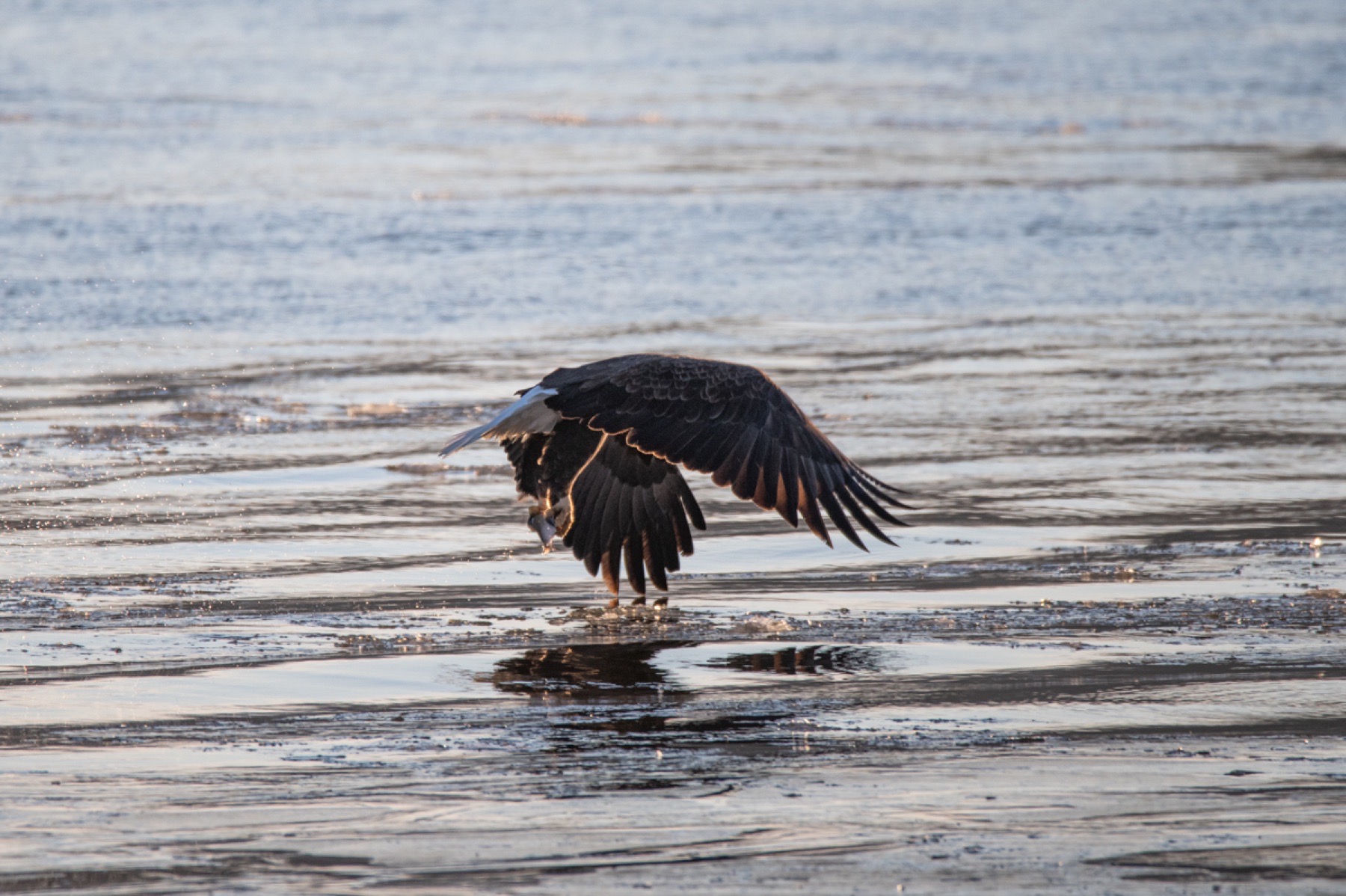
Wind in your face often means the bird will launch away from you. That is a poor setup for a clean frontal, but it can be the right setup for a fish carry-out, backlit spray or the power of a fast departure.
Frame a little wider and leave room in the direction of travel. If you keep waiting for the eagle to turn toward you, you may crop the story that the wind was giving you all along.
Use crosswind for banks and profiles
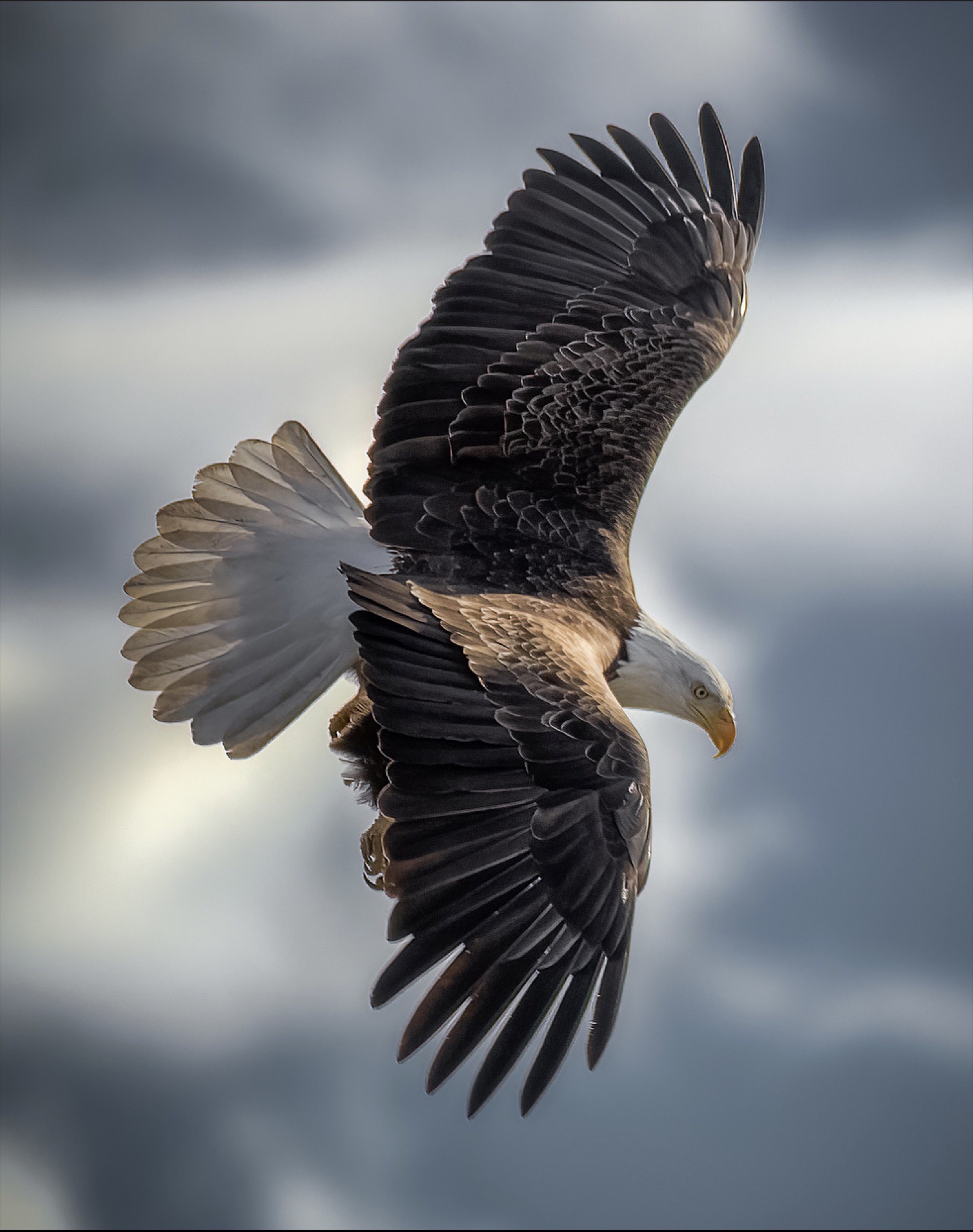
A crosswind is the best starting point when you want wing geometry instead of a straight approach. Eagles often roll into the wind as they turn, showing the head, body and layered wings in one frame.
Watch several passes before choosing a spot. A repeated bank is more useful than one lucky flight because it lets you refine the background, focal length and timing without chasing the bird.
Set up a perched takeoff before the wings open
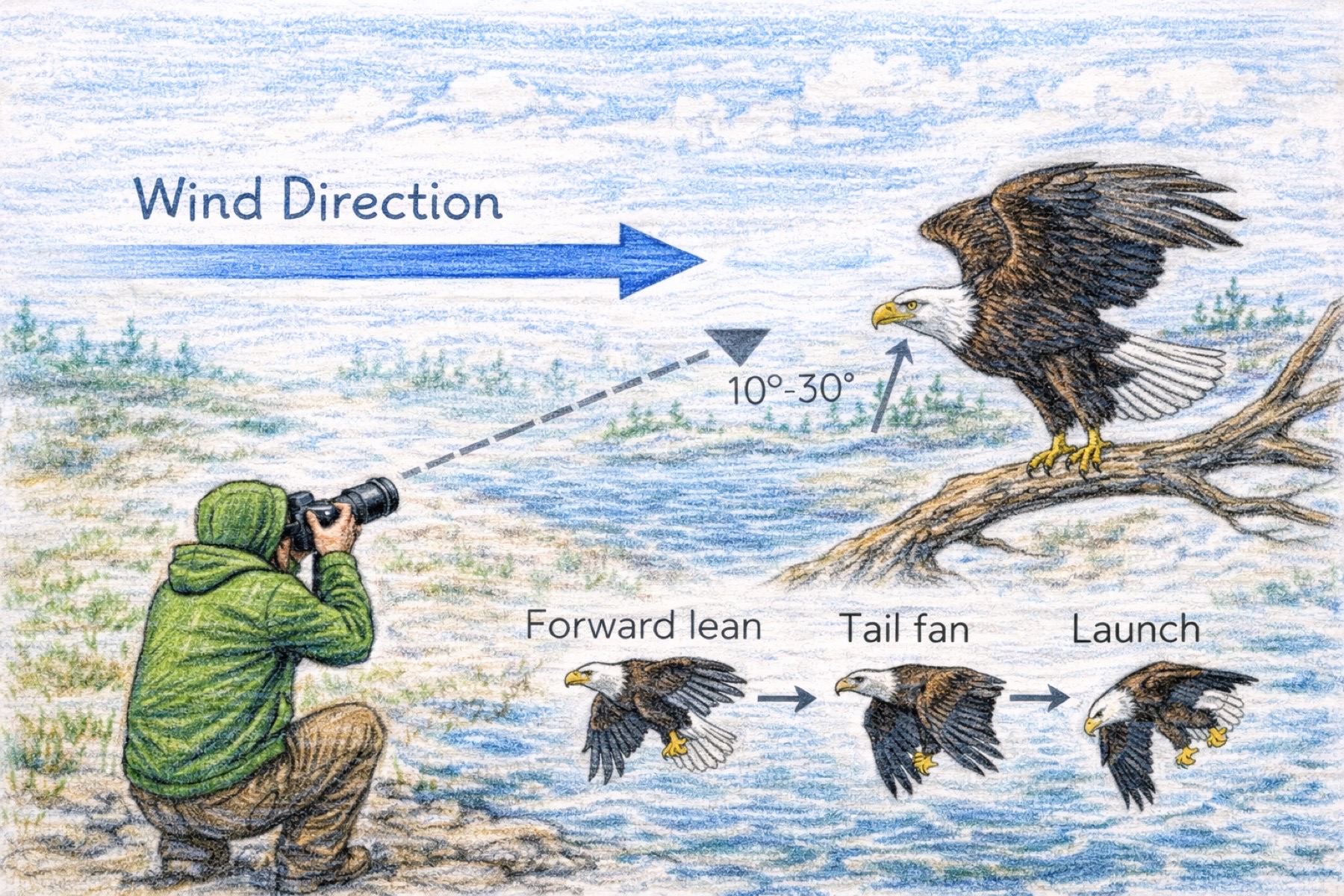
Study the perch before you move. Find the open launch side, place the wind at your back and work about 10–30 degrees off the beak line when the terrain allows it.
Then watch the bird, not the shutter button. A forward lean, tail fan and weight shift usually matter more than a higher burst rate. Start the burst on the shift, before the wings fill the frame.
Use ice holes as repeatable strike lanes
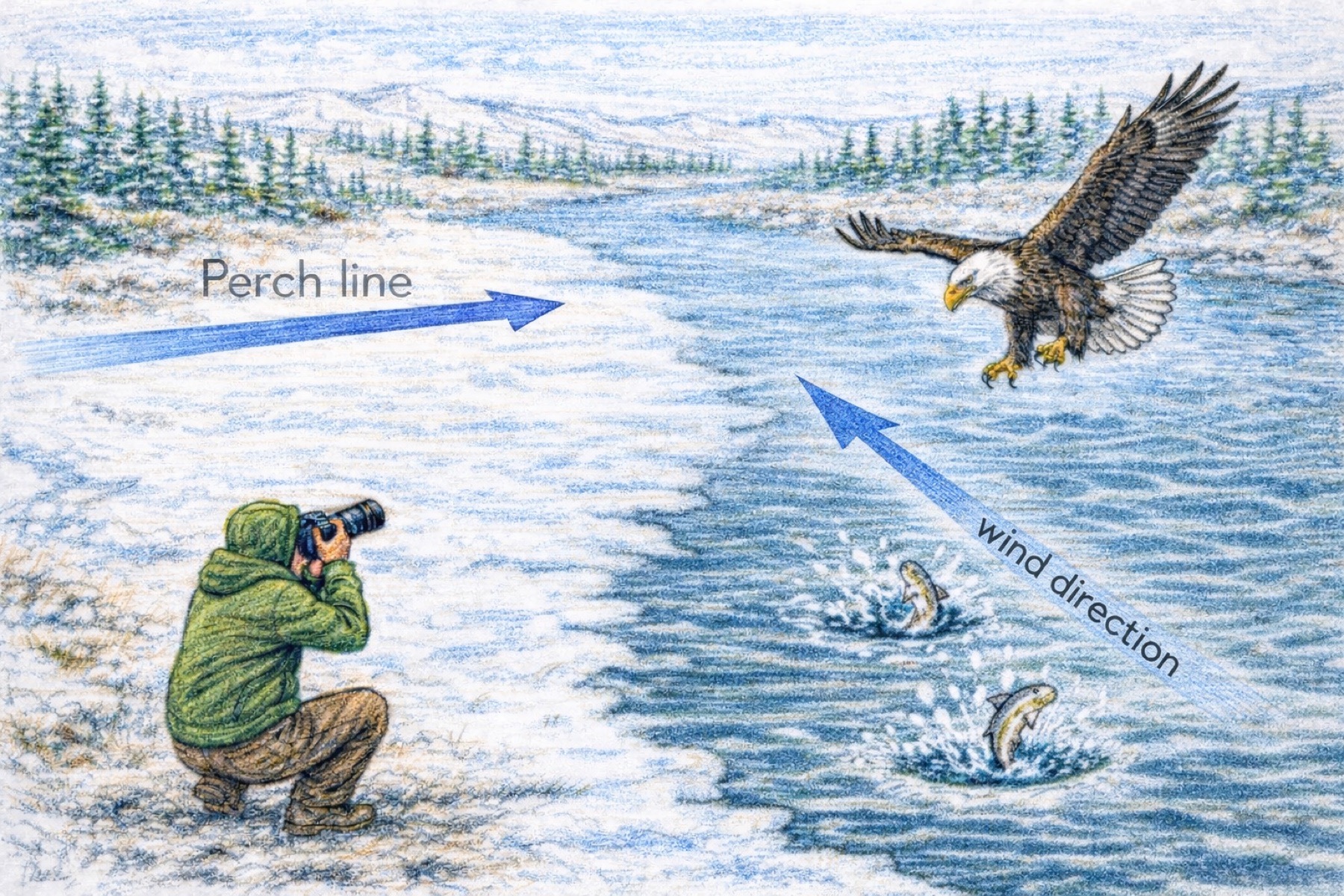
An opening along an ice edge narrows the water an eagle can hunt. If fish or gull activity repeats at the same hole, the wind can help you predict which side the eagle will use to approach.
Start with the wind at your back, then move modestly off axis so the face, talons and splash can separate. Pre-focus the opening and stay wide enough for the lift-out, not only the strike.
Work tailwater seams without fighting the background
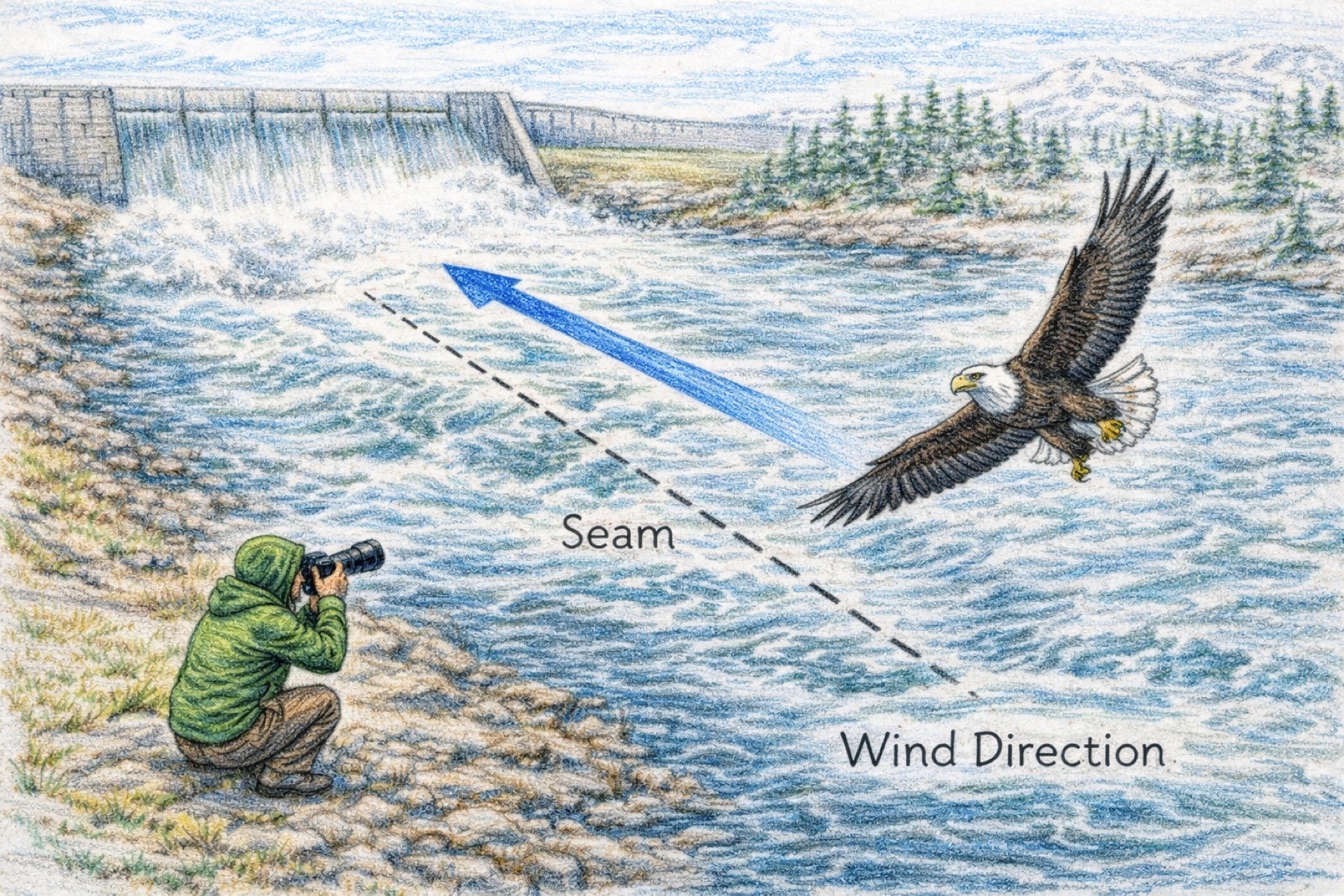
Tailwaters add current, foam and spray to the wind problem. Sit off the seam so an approaching eagle has to crab slightly into the wind. That angle can show the face and talons instead of a flat back.
Watch foam lines, boils and the perch birds keep using. If autofocus jumps to the water, pre-focus the strike lane and reduce the focus area. When a carrier looks back, widen the frame; another eagle may be closing from behind.
Read a confluence as an arc, not a straight line
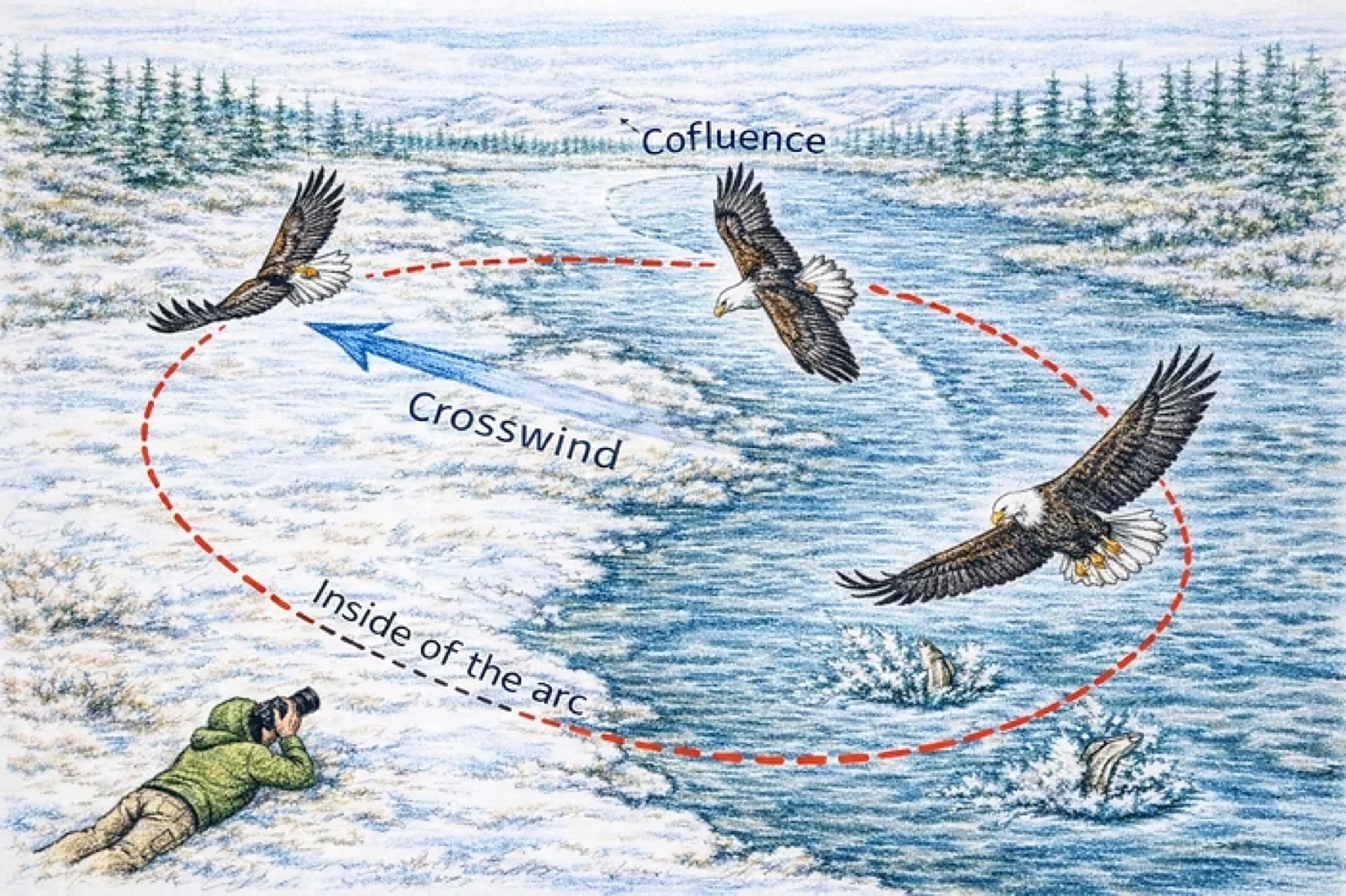
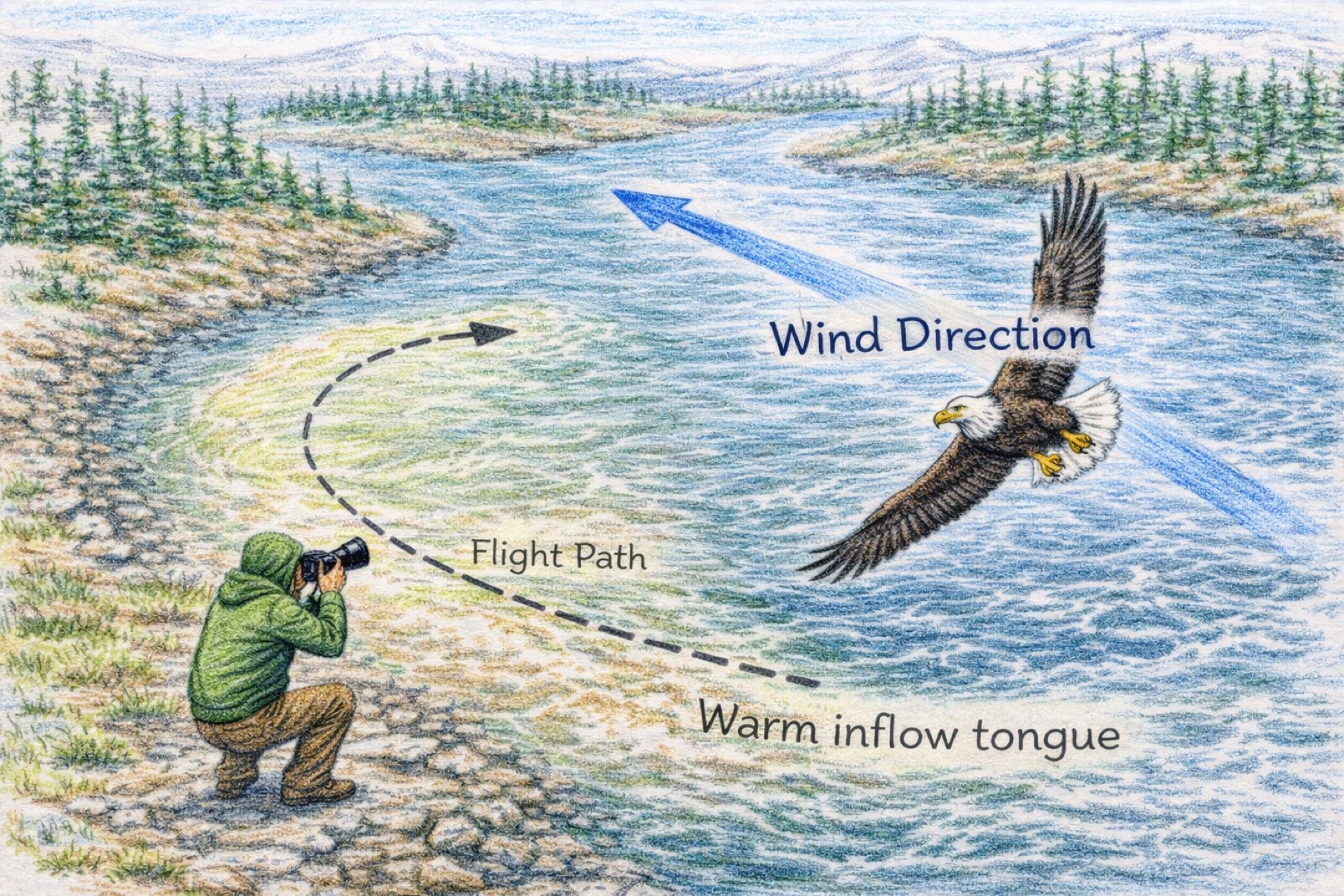
At a confluence or warm inflow, eagles often work a broad crosswind curve while they scan and turn. Ducks flushing repeatedly or gulls tightening over one part of the water can reveal where that arc is developing.
Do not wait for every bird to fly directly at you. Step back enough to hold the full turn and watch where the wings roll toward the camera.
Stand inside the crosswind arc
The inside of the arc is the side of the curve where the eagle's bank presents the body and wings most cleanly. Move only after you have seen the route repeat, then choose the point where the bird, light and background line up.
This is also where a slightly wider composition helps. Leave room for the bank to finish and for a second bird to enter during a chase or theft attempt.
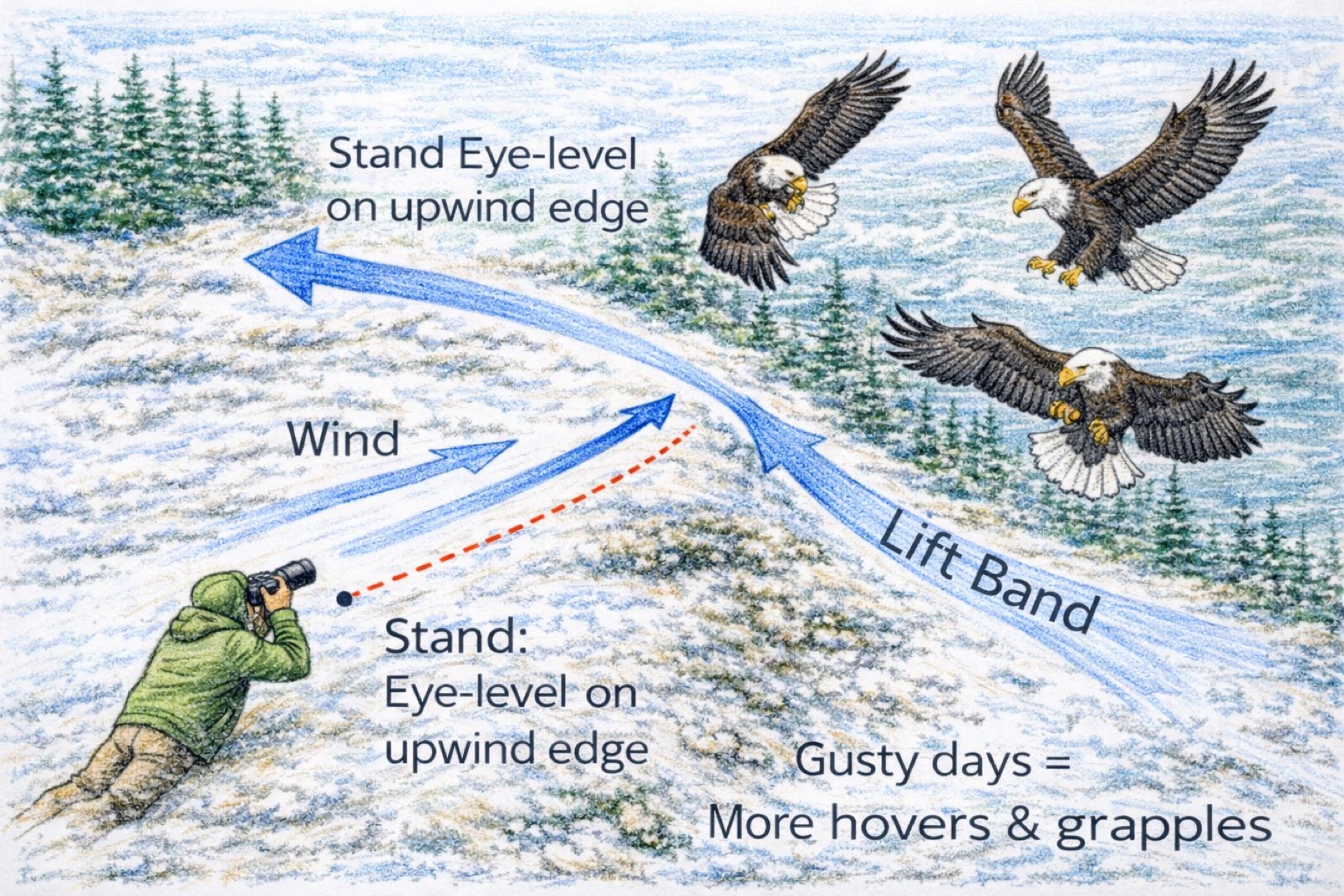
Use lift, turbulence and light together
Wind hitting a ridge can create a narrow band of rising air where eagles soar with little flapping. Near a dam, rotor and gusts can create abrupt corrections instead. Give the bird more room in the frame and expect the flight path to change.
Turbulence and atmospheric shimmer are different problems. If the bird wobbles, track more loosely. If the whole image looks unstable over warm water or spray, move to cleaner air, a different angle or a shorter distance.
Finally, pair the wind with the light. Wind at your back with front or side light favors detailed frontals. Crosswind with side light builds shape. Wind in your face with backlight can turn spray and exits into the picture instead of a compromise.
Frequently asked questions
Do bald eagles take off into the wind?
Usually. A headwind increases airflow over the wings and lowers the ground speed needed for lift, so an eagle often faces into the wind before launching. The perch and surrounding terrain can still limit the available direction.
Where should I stand for bald eagle takeoffs?
Start downwind of the perch so the wind is at your back and the eagle is likely to launch generally toward you. Work about 10–30 degrees off the beak line, keep a respectful distance and never block the bird's normal flight path.
Is crosswind good for bald eagle photography?
Yes. Crosswind often produces strong banks, side profiles and layered wing shapes. Watch for a repeated route, then stand where the eagle rolls its body and wings toward the camera.
The strongest eagle frames start before the bird launches. Wind, light and position narrow the possibilities so you can react with purpose.